Seat Belt Tensioner: Description and Operation
1st Version:
Turbine Tensioner - Layout:
The turbine tensioner unit comprises:
- Gas generator
- Flying piston
- Tube filled with fluid
- Turbine wheel
- Automatic seat belt retractor
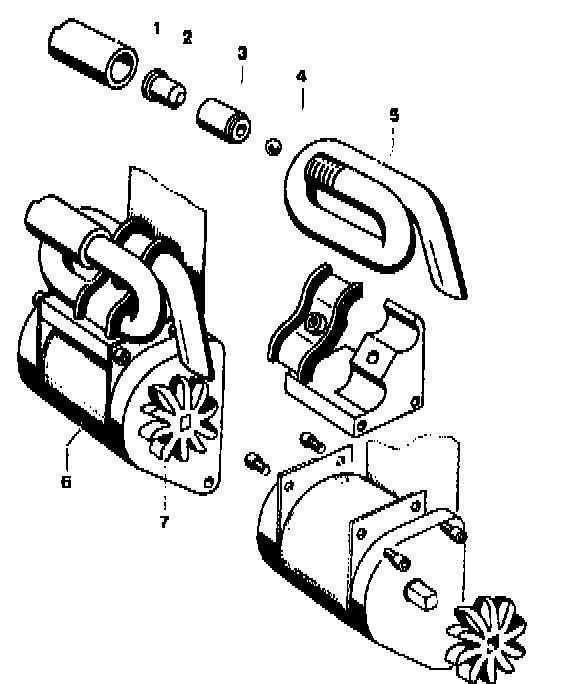
1 Cap nut
2 Gas generator
3 Gas generator bearing
4 Flying piston
5 Tube filled with fluid
6 Automatic seat belt retractor
7 Turbine wheel
Operation:
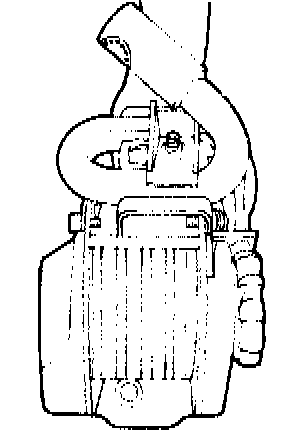
If an electrical impulse is sent from the control unit to the gas generator, the fuel is ignited producing a gas under high pressure which forces the flying piston through the tube filled with fluid. The fluid is forced through a nozzle which was previously closed onto the blades of the turbine wheel causing it to turn.
The reel shaft is caused to wind back thus eliminating seat belt slack and the film reel effect. The belt thus sits tightly on the person in question offering him or her greater protection. The forces of the belt tensioner have been specially calibrated so that the belt does not pull the passenger back into the passenger's seat.
The complete unit is installed instead of the standard belt retractor in the respective-hand center pillar. The electrical connection is via a two-pin plug.
Before the driver airbag unit is fitted in the vehicle it is electrically shorted automatically by means of a short-circuiting link. The short-circuiting link is automatically opened when the plug connection is plugged in.
2nd Version:
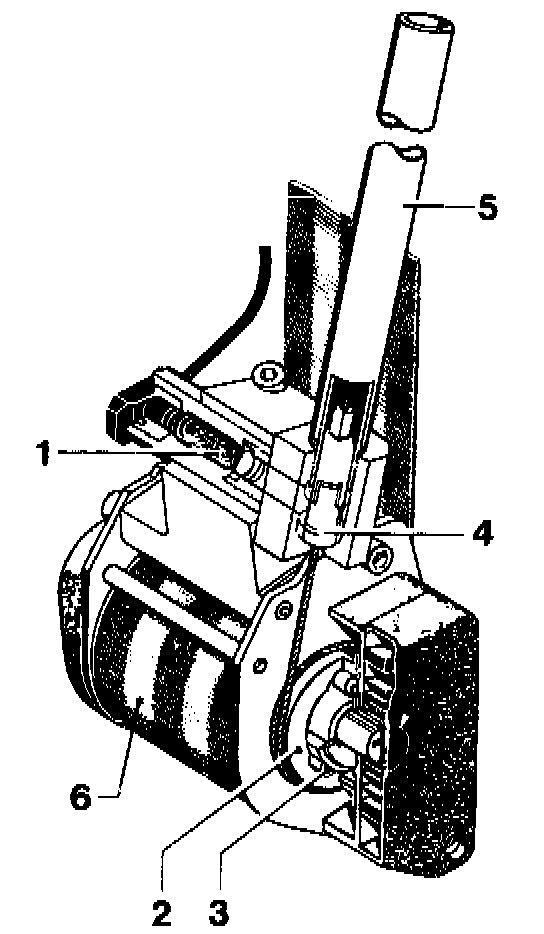
Cable Tensioner - Layout:
The cable tensioner is a further development of the turbine tensioner and has been installed since 09/84.
1 Gas generator
2 Cable pulley
3 Coupling
4 Plunger with cable
5 Tube
Design of cable tensioner (2nd version as of 09/84):
Method of Operation:
The complete unit is installed in the left-hand and right-hand center pillars and connected electrically by means of a 2-pin plug. The belt tensioner unit is automatically shorted by means of a short-circuiting link before assembly in the vehicle. The short-circuiting link is automatically opened when the plug connection is plugged in. If the control unit sends an electrical pulse to the propellant capsule, high-pressure combustion gas is released. This propellant gas passes by way of a T-piece to the plunger which is accelerated upwards. The wire cable pulls on the cable pulley and rotates it, and thus the belt retractor, to tension the seat belt. This reduces any slack in the belt and prevents the so-called film-reel effect in the wound belt.
The forces of the belt tensioner have been specially calibrated so that the belt does not pull the passenger back into the passenger's seat.
Test for Triggering:
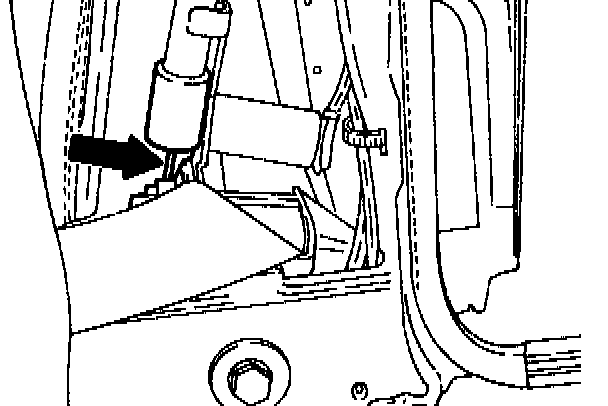
A colored mark (green or yellow) is present on the cable to check whether the belt tensioner has been triggered. If no colored mark is visible, the belt tensioner has been triggered and must be renewed. During the launch of this series, several vehicles were manufactured without this colored mark on the cable of the belt tensioner. These belts must be tested as follows:
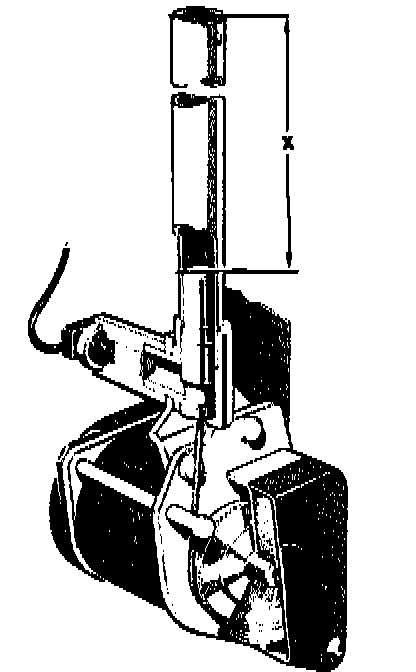
Remove the protective rubber cap on the end of the tube and measure dimension "X".
Dimension X (107/123 Chassis): 140 ± 5 mm
If dimension "X, is less than the specified length, the belt tensioner has been triggered and must be renewed.
As of 01/86, there is an observation window in the housing of the belt tensioner, through which the cable is visible. Belt tensioners where no cable is visible have been triggered and must be renewed.
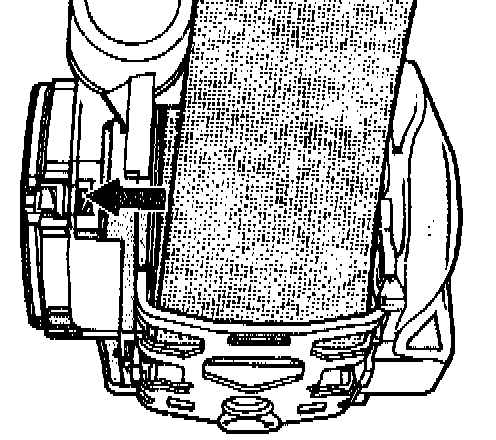
As of 08/87, belt tensioners are supplied by two manufacturers.
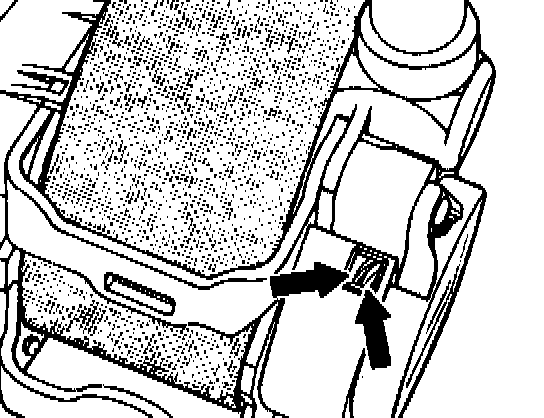
The housing of the Autoflug belt tensioner is also fitted with an observation window through which 2 cables are visible. Autoflug belt tensioners where only 1 cable or no cable is visible, have been triggered and must be renewed. The Autoflug belt tensioners are factory-fitted with a tube which is approx. 80 mm shorter than that of the Repa belt tensioners.
Repa belt tensioners also feature these shorter tubes as of 01/88.